A Summer in Color: Sitar Mural Internship 2026
This summer, I had the opportunity to intern as a mural artist at Sitar Arts Center in Washington, D.C. Sitar is a nonprofit arts organization dedicated to providing young people with access to high quality arts education and creative opportunities. Through its S.E.A.L. Mural Arts Program, I got to experience what it’s like to work as part of a creative team while also helping bring a large scale mural from an idea to a finished piece. Over the course of the internship, I was able to grow as an artist, collaborate with other young creatives, and learn more about the process and purpose behind public art.
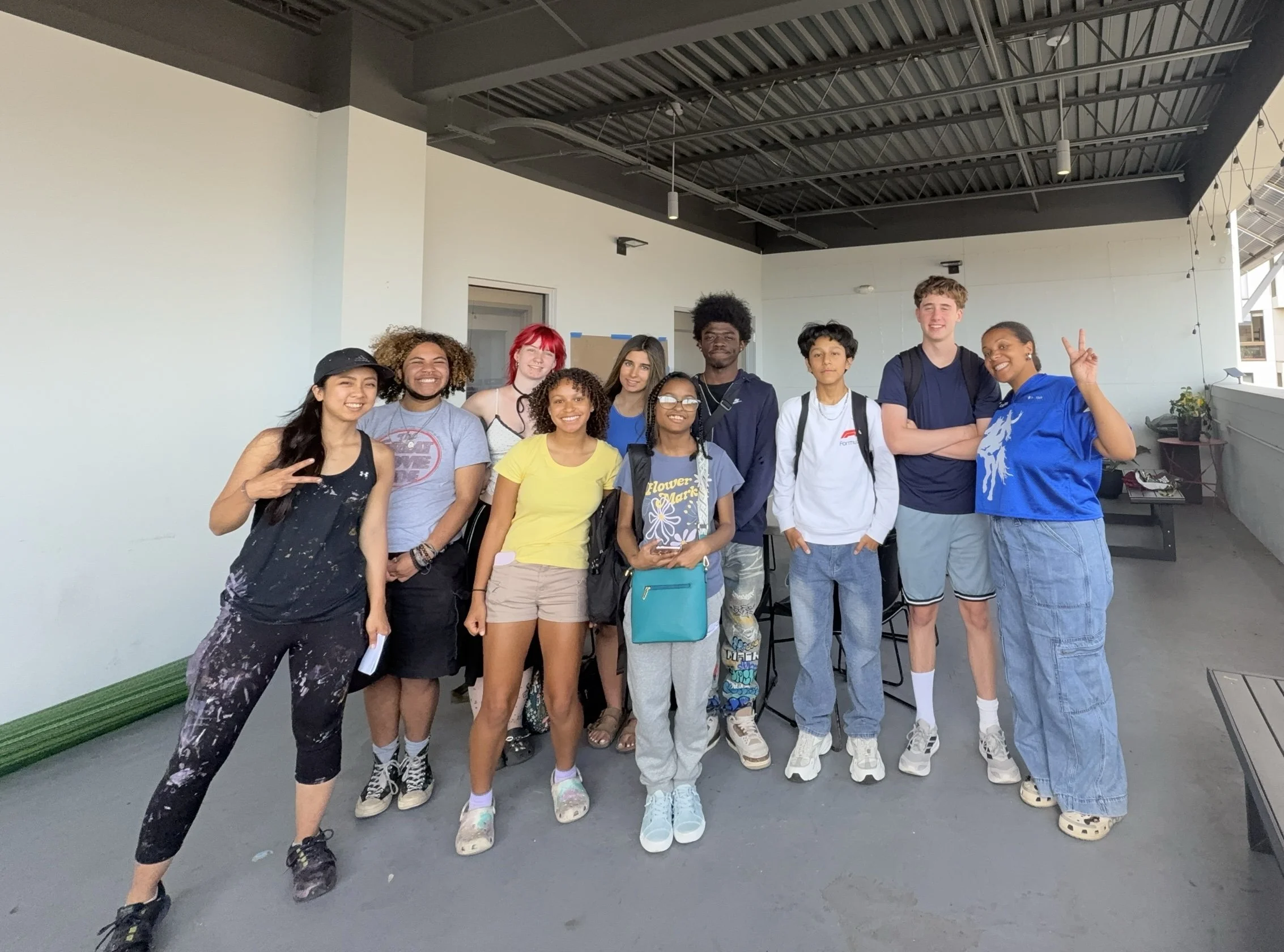
During the first week of this six-week internship, we jumped straight into talking about the idea for our first mural project. Our first project brought us to The Children’s Guild, a K-8 school in Washington, D.C., where we were asked to create a mural across a 25-foot long wall. When we first saw the size of the space, the idea of filling the entire wall felt a little overwhelming. The mural would be located in the school’s special needs and autism wing, so as we began brainstorming, we knew our design had to be created with the students and environment in mind. Once we understood the space we were working with, we had to actually come up with a plan. This turned out to be the most challenging part of the process. With nine mural artists on our team, everyone had different ideas about what the mural should look like.
We spent hours brainstorming and then even more time discussing which ideas worked best together. We ended up voting on a lot of the smaller decisions, even things as specific as whether we wanted one tree or two and where they should be placed within the composition. Since this was my first mural, I had no idea how open ended the process would be, which was both exciting and a little nerve-wracking. The administrators at The Children’s Guild had only given us a few specific criteria and themes they wanted us to consider, so most of the creative decisions were left up to us.
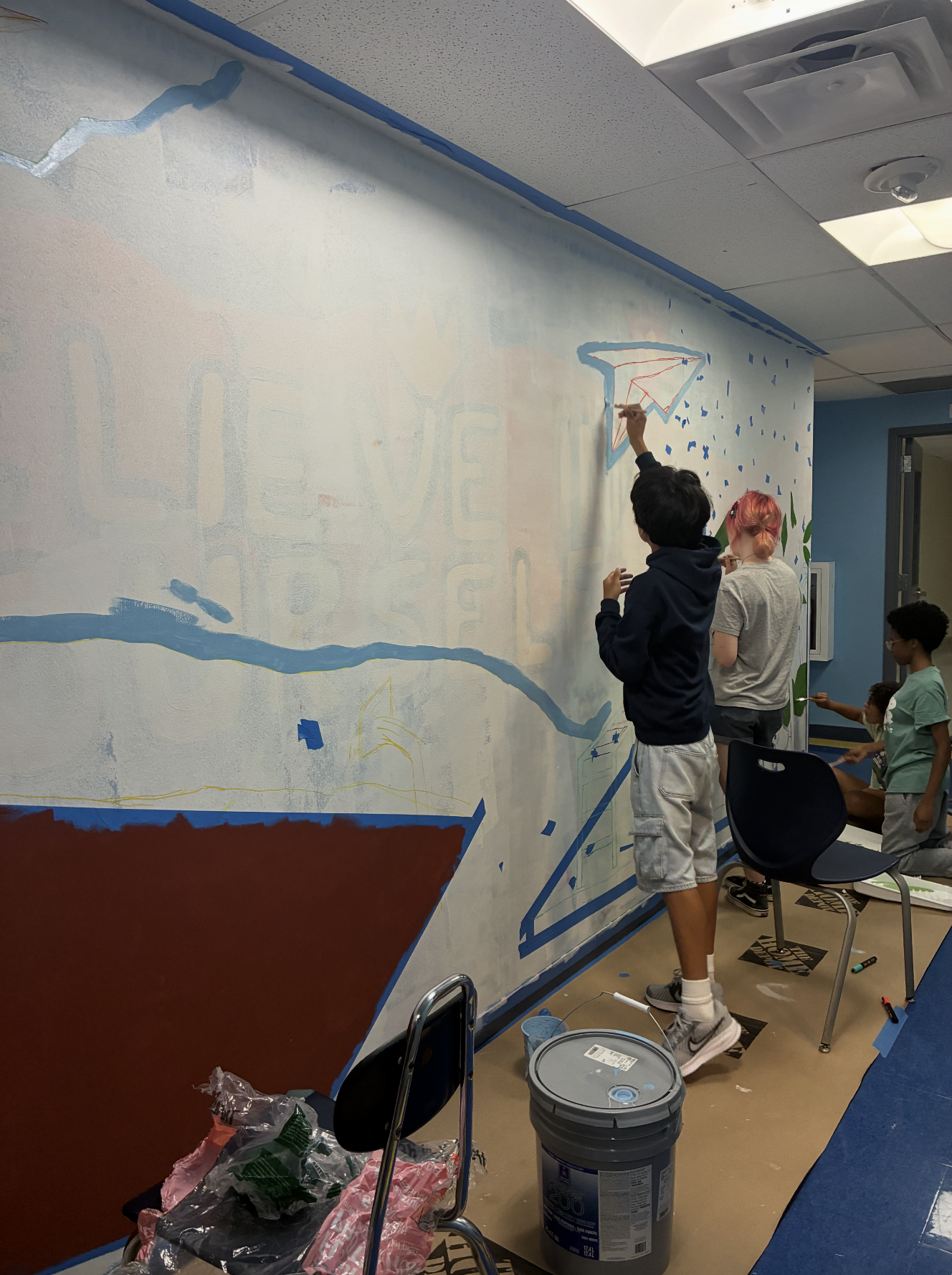
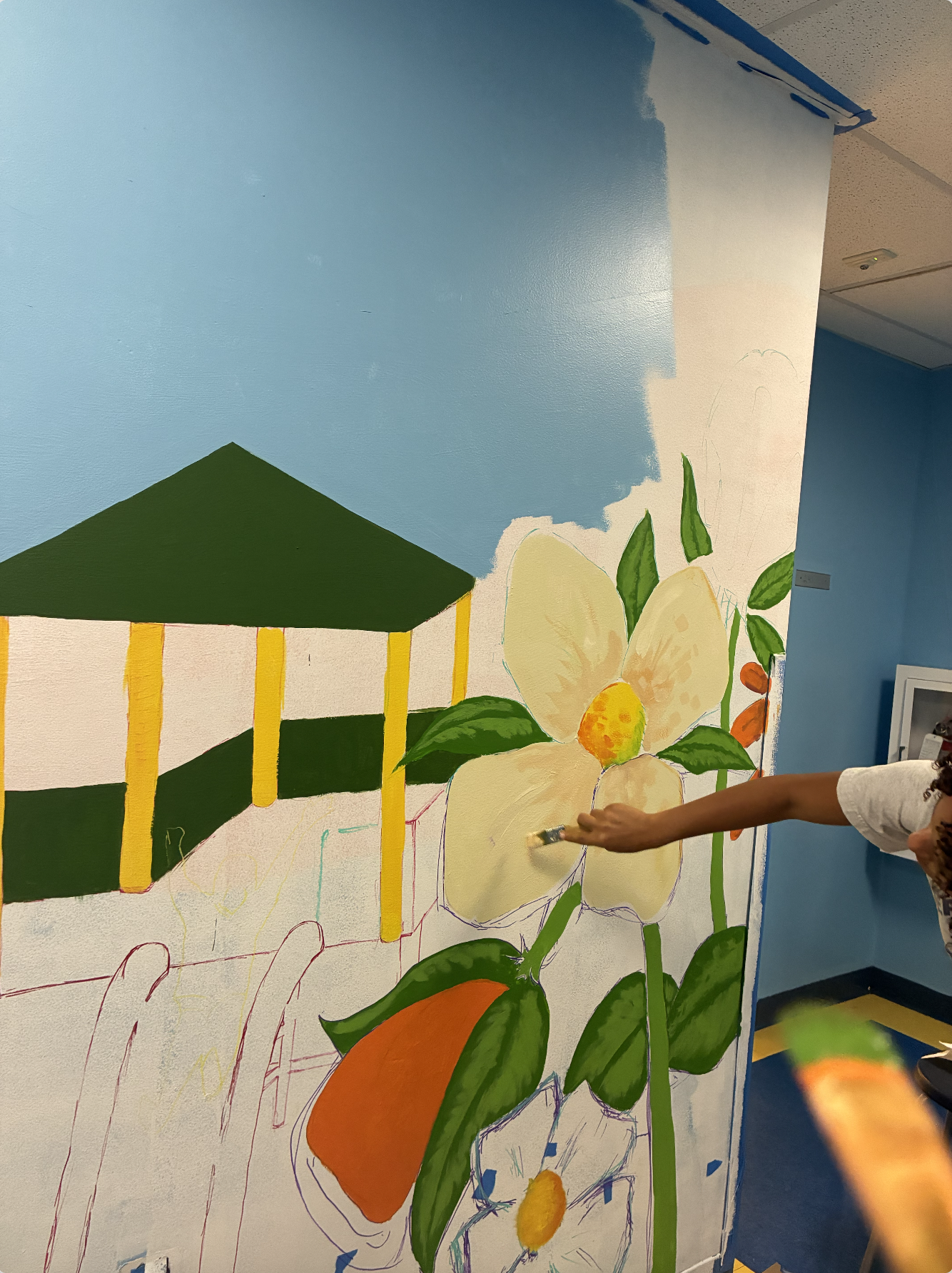
To start bringing all of our ideas together, we sketched out a basic design on a long piece of paper meant to mimic the proportions of the actual mural wall. From there, we created a digital mockup using Procreate, a program I had never used before. Once our mockup was finished, we presented our design to the administrators at The Children’s Guild over Zoom. After all the brainstorming, debating, voting, and revising, it was exciting to finally present our idea (it was also my first time doing a client pitch), and even more exciting when they approved it. For the next week, we worked at The Children’s Guild every day to bring this design to life.
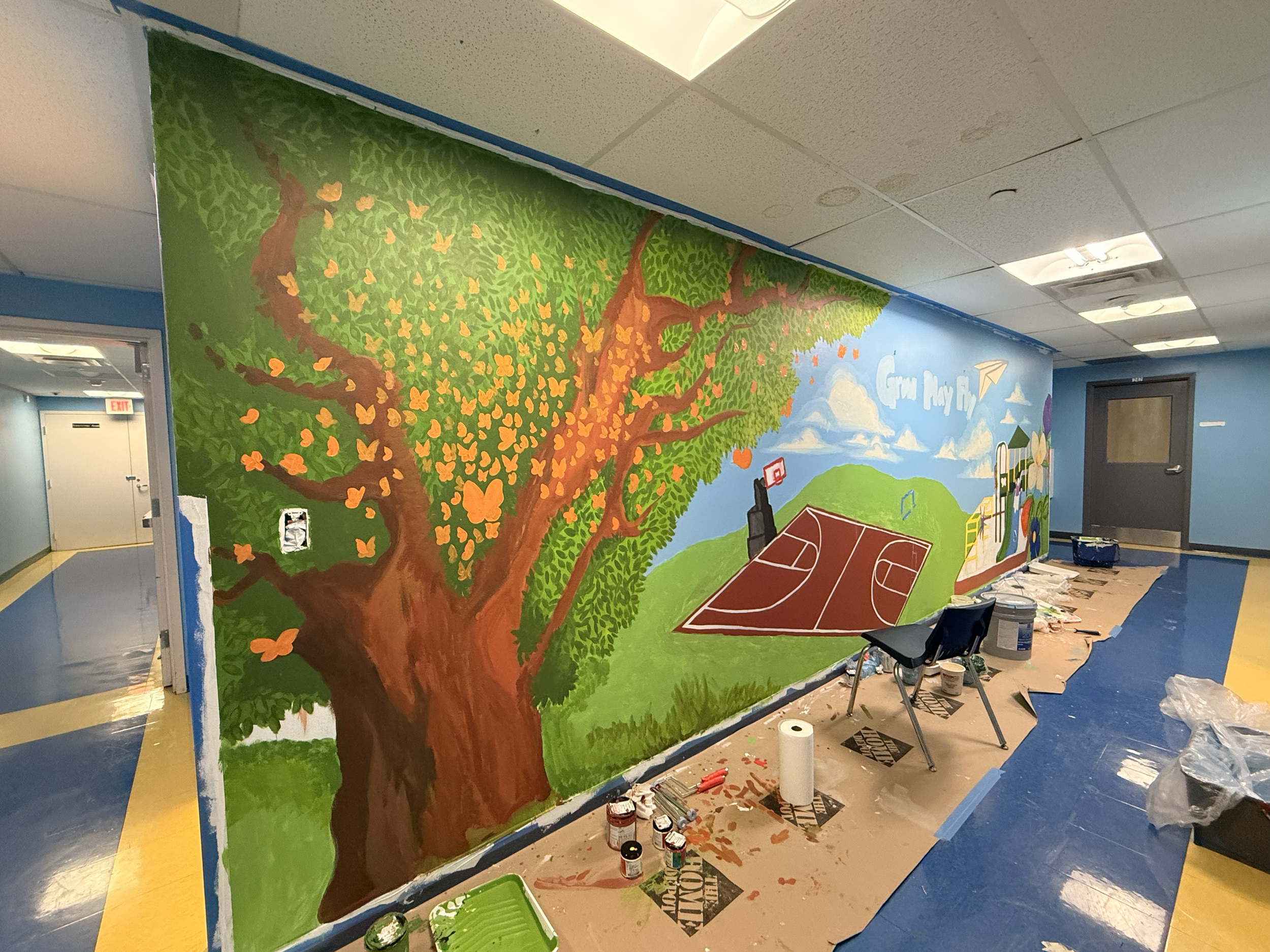
I had never worked on a piece anywhere near this scale before, so seeing our small sketches become a 25 foot mural was a new experience. With our whole team working together, we were able to divide the wall into different sections and tackle such a large project piece by piece. As the week went on, it was exciting to watch the blank wall slowly transform int the design we had spent so much time planning. It felt meaningful knowing that the mural would stay there long after our internship ended. Rather than creating a piece that would eventually be stored away, we were making something that students would see every day. Knowing that our artwork has become a permanent part of the school made finishing the mural feel especially rewarding.
Our next project took us back to Sitar Arts Center, where we were assigned to create a backdrop for Sitar’s 19th annual summer musical, The Lightning Thief: Theatre for Young Audiences Edition. The musical’s coordinator wanted a backdrop that was simple and versatile enough to work throughout the entire show, while still having vibrant pops of neon color that would stand out on stage and reflect the modernity of this play.
Taking inspiration from the world of Percy Jackson, we filled the backdrop with characters, symbols, and objects connected to Greek mythology. We incorporated everything from Hades’ pomegranate and the Minotaur to a Cyclops, Medusa’s snakes, and other mythological references. We also added graffiti-inspired lettering and linework, including words like “Olympus,” to give the backdrop a more modern feel that fit the style of Percy Jackson. One of the biggest decisions we made during the creation of this piece was to use colorful line art rather than filling each illustration with solid blocks of color.
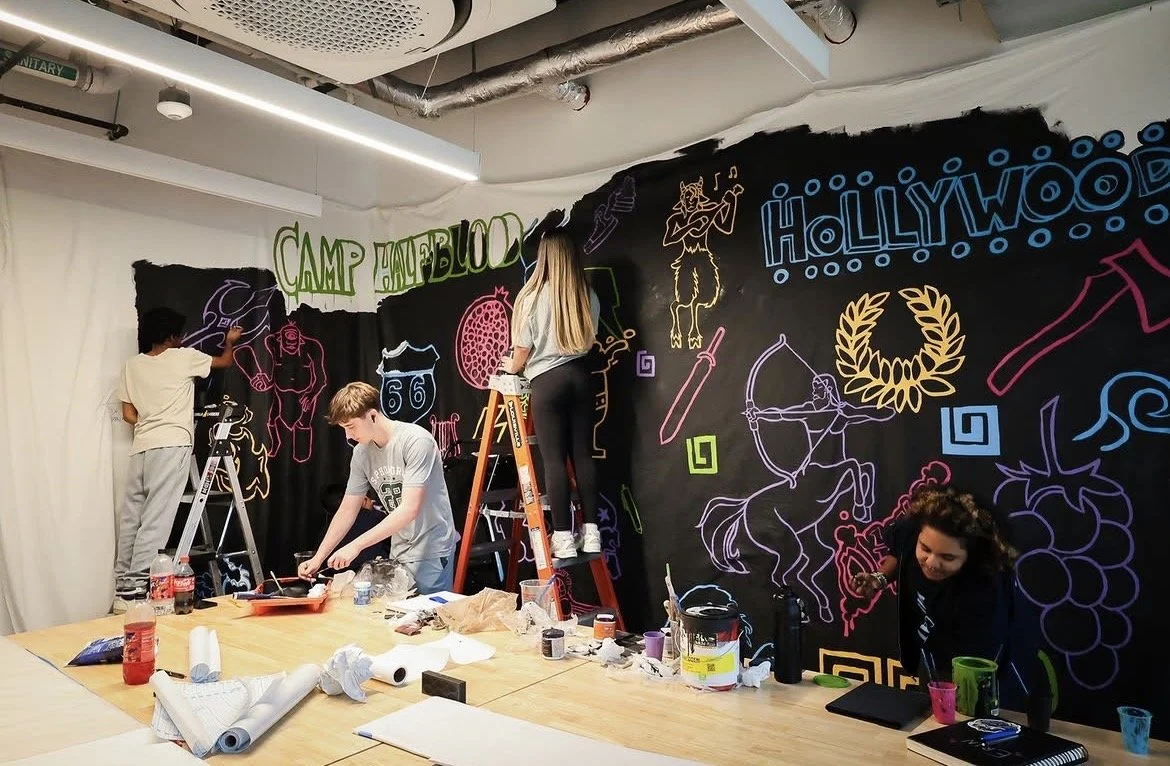
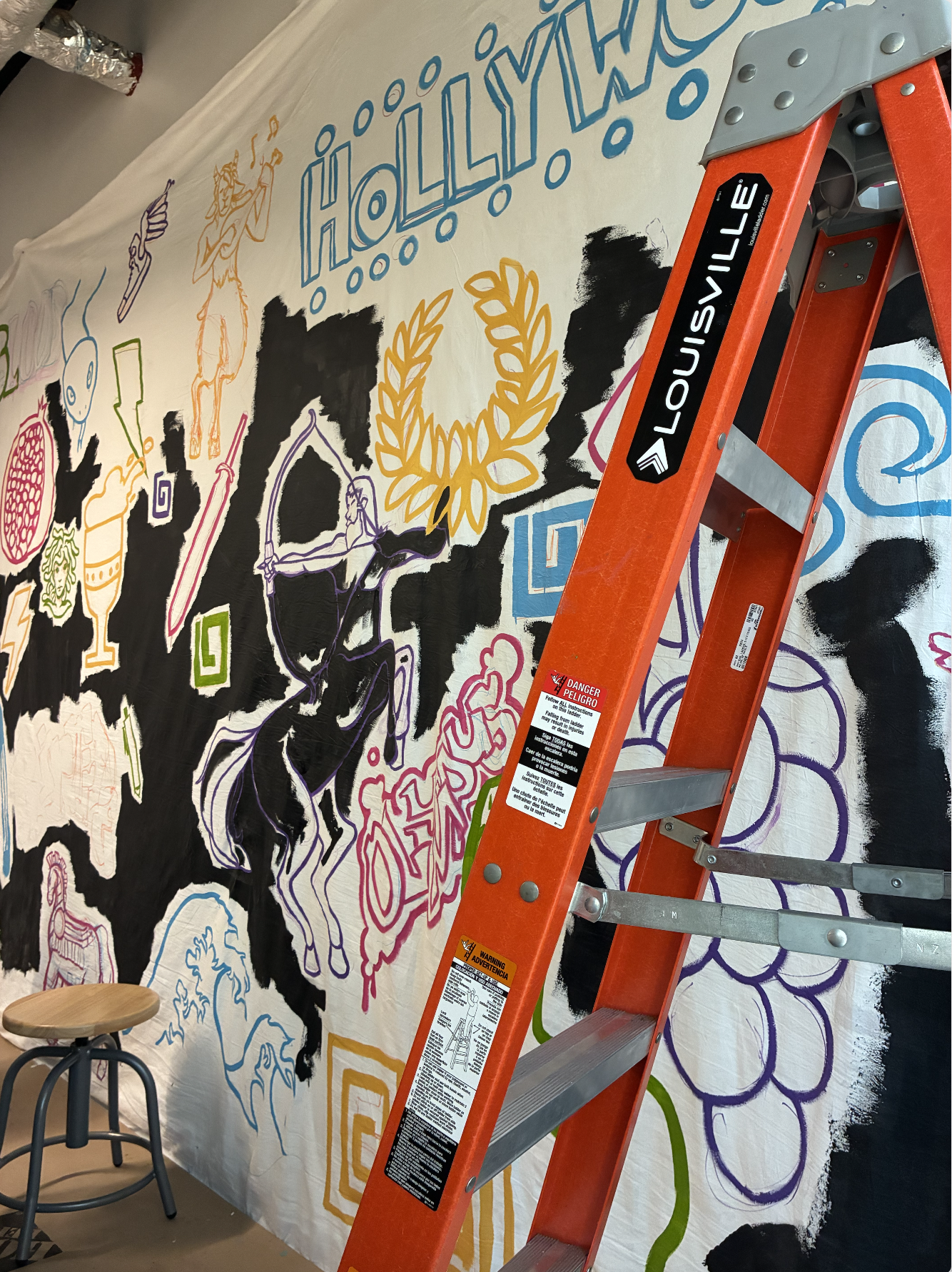
This allowed us to bring in the bright neon colors the musical coordinator wanted without making the backdrop too busy or distracting from the actors on stage. Since the same backdrop would be visible throughout different scenes, keeping the illustrations mostly as outlines made it feel more neutral and multipurpose while still giving the stage its own personality. Seeing all of our individual drawings come together so cohesively was so cool and showed me how even relatively simple designs can transform a space.